Thesis Defense Training: Master Your Defense with Confidence
The training is deliberately built in two stages: in the online half-day, participants clarify the procedure and ground rules of their own defense – along the lines of their own doctoral regulations – get to know the particular presentation logic of the defense talk, develop storyline strategies for their own research, and work through question types along with matching answer strategies. Between the two sessions, each participant prepares their own short talk. The in-person simulation day is where it gets real: each participant defends their own work in front of the group, which takes turns acting as the examination committee and as observers – with video feedback on their own impact.
The group stays deliberately small: a maximum of eight people, so that everyone really does run through their own simulation – and the interdisciplinary mix is not a compromise but part of the realism, since real committees include members from outside the field too. The collegial atmosphere stays protected; the trainer alone asks the truly hard questions, announced and controlled. Anyone who wants to go deeper into presentation design will find the right follow-up format in the Presenting Your Research workshop.
Content
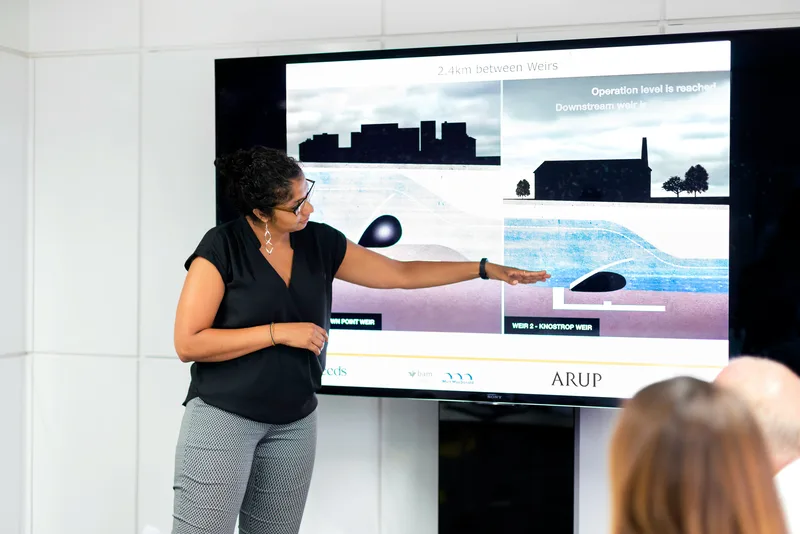
The training's content is consistently practice-oriented: compact input during the online session, then simulations with rotating roles, structured feedback, and video analysis on the in-person day.
- Procedure, roles, and ground rules of the defense – including your own doctoral regulations
- The defense talk as a genre of its own: presentation logic and mechanics of the exam situation
- Storyline strategies: telling your research story backward from the results
- Question taxonomy: comprehension, methods, context, and transfer questions
- Answer strategies – and the art of a composed "I don't know"
- Handling nervousness, exam anxiety, and blackout moments
- Simulation with rotating roles: candidate, committee, observers
- Video feedback: seeing and understanding your own impact
- Controlled escalation: experiencing the toughest question in a safe setting
Nach dem Workshop können die Teilnehmenden …
- Know the procedure, roles, and ground rules of your own defense, and assess the exam situation realistically
- Shape the defense talk as a genre of its own: develop a strong storyline working back from your results
- Recognize the committee's question types and respond with matching answer strategies – staying composed even when you don't know the answer
- Handle nervousness, blackout moments, and critical follow-up questions constructively
- Assess your own impact in the exam conversation realistically through simulation and video feedback, and improve it in a targeted way
Key Facts
Duration & Format
Audience
Group Size
Languages
Interested?

- Tailored: Every format is customized to your context – from methodology to scheduling
- Practical: Grounded in academia, field-tested, and immediately applicable in everyday research
- Efficient: Clear structures and methods deliver fast results
- Sustainable: Materials and transfer tasks secure the learning effect long-term
- Motivating: Interactive formats boost engagement and team spirit